

The Euro Arrives in Bulgaria: Power, Stability, and Economic Change
Bulgaria and the Euro: A Monetary Decision with Far-Reaching Implications
January 1, 2026, marked a milestone in Bulgaria’s economic history. With the official adoption of the euro, the country took a decisive step toward deeper integration into the European economic sphere. Beyond political or institutional symbolism, the currency change represents a structural transformation that directly affects citizens’ daily lives, market dynamics, and the state’s room for maneuver over the economy.
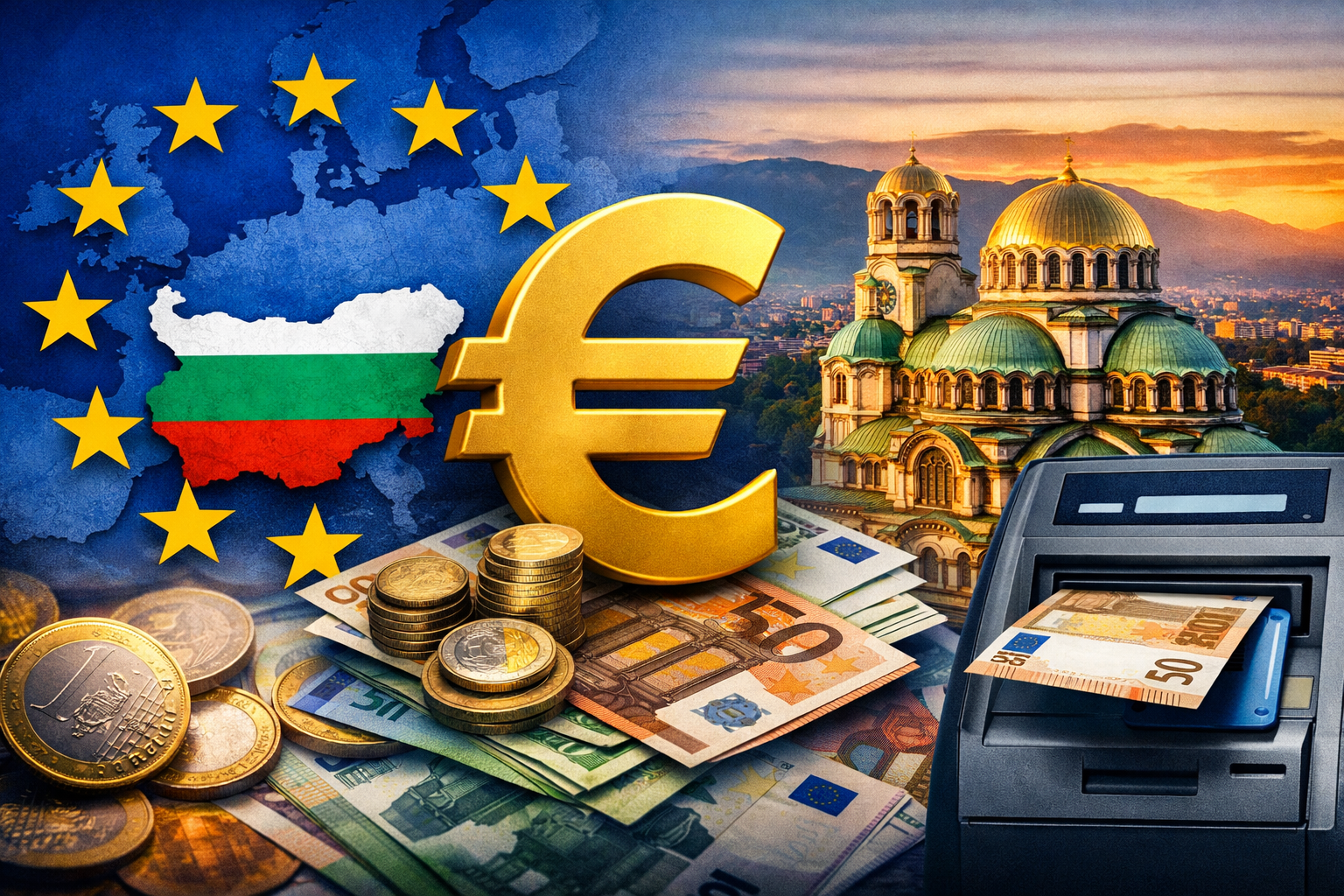
Images from the first day—shops operating smoothly, ATMs dispensing euros moments after New Year celebrations began, and an orderly cash transition—reflect more than a successful technical operation. They are evidence of a long, carefully planned process driven primarily by the need for a more predictable, functional monetary system compatible with an open economy.
From Centralized Economy to Monetary Integration
Bulgaria’s recent economic history is defined by profound transformation. After decades of centralized planning, the country faced recurring episodes of inflation, currency devaluation, and declining trust in economic institutions in the years following the collapse of the socialist bloc. The lev, the national currency at the time, bore the weight of these tensions, many of them linked to political decisions that directly eroded citizens’ purchasing power.
The adoption of the euro did not occur in isolation. It represents the culmination of reforms aimed at limiting monetary discretion, strengthening fiscal discipline, and providing a more stable framework for investment and trade. In this context, the European common currency functions as an anchor that reduces political manipulation of money and shifts part of monetary management to a broader structure less exposed to domestic pressures.
A Transition Driven by Markets and Technology
One of the most notable aspects of the process was the financial system’s ability to adapt. Banks, retailers, and technological platforms responded swiftly, demonstrating that when clear rules and defined objectives are in place, economic actors can adjust more efficiently than traditional bureaucratic structures.
The smooth conversion from leva to euros underscores the operational maturity of the financial sector and the effectiveness of market mechanisms when allowed to function with predictability. Technology once again proved to be a critical ally in reducing friction, costs, and transaction times.
The Euro as a Tool for Open Exchange
From an economic standpoint, the euro removes barriers that for years increased costs and limited competitiveness. Eliminating exchange-rate risk facilitates the trade of goods and services, expands opportunities for small and medium-sized enterprises, and allows consumers to compare prices and access broader markets without artificial penalties.
The common currency also enhances the mobility of capital and people, granting citizens greater freedom to save, invest, travel, or start businesses beyond national borders. In a globalized environment, this monetary interoperability becomes a strategic advantage.
Stability, Trust, and Monetary Responsibility
Stability is another central element. By joining a broader monetary area, Bulgaria reduces the risk of inflationary episodes driven by short-term domestic decisions. While no system is without challenges, the framework of the European Central Bank introduces stricter and more predictable rules that limit the use of money as a political instrument.
For citizens, this translates into greater confidence in the value of their savings, more predictable contracts, and a more favorable environment for long-term planning. Monetary stability is not an end in itself, but a means for individuals and businesses to make informed decisions without the constant uncertainty of depreciation.
Direct Benefits for Users
The adoption of the euro brings tangible advantages:
- Greater efficiency and transparency in transactions by eliminating conversion costs and simplifying international trade.
- Protection of purchasing power by reducing risks associated with abrupt devaluations.
- Broader access to international markets, facilitating business, investment, and mobility.
- Greater economic autonomy by reducing the influence of national political decisions over the currency.
- A more stable environment for saving and investment, encouraging sustained prosperity.
A Decision That Goes Beyond Currency
Bulgaria’s entry into the euro should not be viewed merely as a change of banknotes and coins. It represents a redefinition of economic rules, a commitment to predictability, integration, and openness. In a world where control over money has historically been a tool of power, limiting its discretionary use is a meaningful step for those engaged in the real economy.
The Bulgarian experience illustrates how societies can evolve toward more open and functional systems, where voluntary exchange, innovation, and fiscal responsibility take center stage. By adopting the euro, Bulgaria not only joins a monetary union but also reinforces an economic model that prioritizes stability, cooperation, and citizens’ freedom of choice.
About the Author