
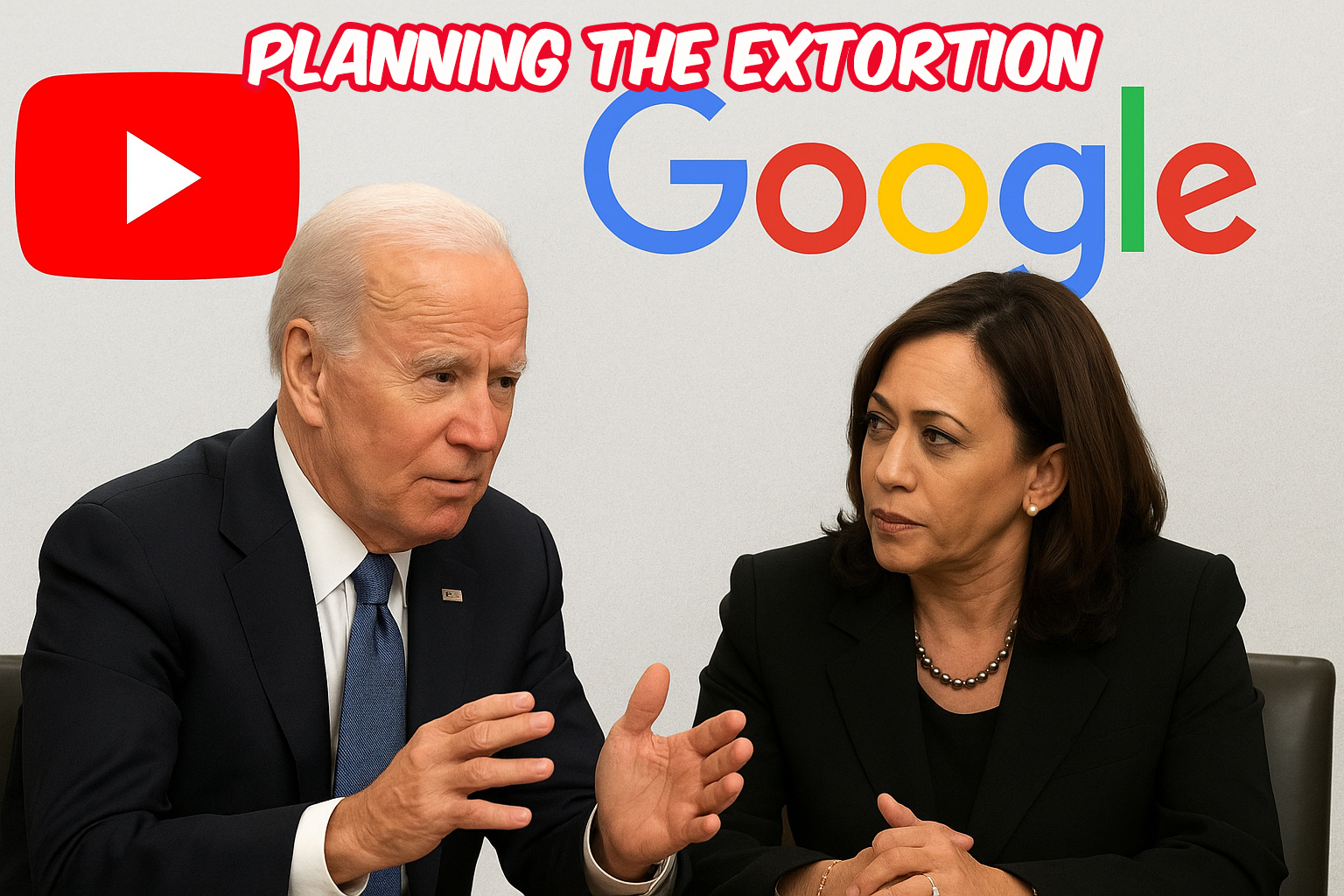
From Moderation to Manipulation: The Hidden Hand Behind YouTube’s Bans
What Has Happened, According to Reported Facts?
Here are the main points of what has become public:
Google/YouTube has acknowledged before the U.S. House Judiciary Committee (led by Congressman Jim Jordan) that officials from the Biden Administration carried out “multiple and sustained outreach efforts” to pressure the company into removing user-generated content related to COVID-19—even when that content did not violate YouTube’s own policies.
YouTube has announced that it will allow certain accounts, suspended or deleted under COVID-19 and election “misinformation” policies (many of which are now outdated), to return to the platform.
Google has described this governmental pressure to remove content as “unacceptable and wrong.”
These facts reveal that this is not simply content moderation, but acts of state pressure intended to influence what content can be publicly shared, even if it is not prohibited under platform rules.
Why Is This Serious? What It Means for a Free Society
When a government forces or pressures companies to remove lawful speech—even when it is not illegal, such as hate speech, explicit calls for violence, defamation, or incitement to crime—several dangerous consequences arise:
Prior Censorship
Prior censorship occurs when an authority decides what can or cannot be said before a message is even expressed. It is one of the most powerful tools for silencing voices. In free societies, speech is allowed to be expressed, and its effects are dealt with afterwards (through debate, rebuttal, competition of ideas), not prevented beforehand. Prior censorship is dangerous because it not only silences specific speech, but also creates incentives for self-censorship: creators, media, or citizens may avoid certain topics out of fear of retaliation.
Imbalance of Political Power
If the state can pressure private platforms to eliminate content that simply disagrees with the official narrative, it gains a weapon to control public opinion. Instead of persuading with ideas, arguments, and evidence, it can silence dissenters. This weakens representative democracy and makes public discourse increasingly homogeneous, since only what aligns with the government “is allowed.”
Erosion of the Rule of Law
The rule of law requires rules to be clear, equal for all, predictable, and free from arbitrary authority. When governments apply behind-the-scenes pressure to remove content—especially legal content—that principle is violated. It also lacks transparency: many of these pressures only come to light through investigations or leaks, which reduces public accountability.
Economic Consequences
For content creators: Account deletion or suspension means loss of income, inability to monetize, loss of audience, and damaged reputation. If uncertainty grows over what can be said without risk of sanction, many will delete legitimate content, reducing innovation, diversity, and digital pluralism.
For platforms: If companies give in to governmental pressure to censor lawful content, they could face lawsuits, penalties, reputational damage, and regulatory risks. Governments might push for stricter censorship laws or hold them responsible for what users publish, even though laws exist that currently shield them, in what appears to be collusion with the Biden Administration.
For society: A reduction in free debate leads to poorly informed public policies, as dissenting ideas, criticism, and conflicting data are excluded. This produces serious mistakes in areas like public health, economics, and institutions. It also erodes public trust in media, platforms, and government, creating high costs for social stability, civic life, and governance.
Polarization and De-legitimization
When one political sector feels its speech is silenced—even if lawful—people perceive that there are no fair channels of expression. This can fuel conspiracy theories, radicalization, censorship claims, and resentment against the state or platforms. Instead of reducing division, censorship can deepen the fractures that governments should address responsibly.
Implications for Individual Freedom
Freedom is a cornerstone: individuals, as long as they do not harm others, have rights. To speak freely, to express ideas—even uncomfortable or mistaken ones. For the government to silence legally protected ideas, even if wrong or controversial, undermines this principle. Freedom is not freedom of what everyone approves, but freedom of what some disapprove—the so-called “freedom of the unpopular.”
Important Nuances, Criticism, and Precautions
For fairness, a few nuances must be recognized:
Private platforms have their own rules. They have the right to moderate content, remove what violates internal policies, including misinformation and harmful content. This moderation is not automatically government censorship unless there is undue external pressure, as documented here.
Democrats argue that some content (such as severe public health falsehoods, viral conspiracies that endanger lives, or misinformation that causes panic) creates a strong case for intervention, even restriction. What they don’t admit is that interventions must be clearly defined, regulated, transparent, audited, and follow due process—not be shortcuts to silence dissent. The smarter approach is to let people speak, and punish illegal acts without prior censorship.
As for law and institutions: there must be separation between government and platforms, an independent judiciary, transparency, and accountability mechanisms to curb abuse.
Possible Consequences If This Becomes Normal
If government pressure to silence even lawful speech becomes routine, the following could happen:
Legalization of prior censorship: Laws could formalize government power to pre-screen or force content removal before publication, under excuses like “misinformation,” “public health,” or “national security.” These vague concepts open the door to abuse.
Standardization of official thinking: If only government-approved narratives can thrive, nuance disappears and self-censorship spreads. Independent debate, criticism, and investigation become limited.
Monopolies of narrative and concentrated media power: Large platforms become mandatory intermediaries. If they cave to governments or fear penalties, they will act with excessive caution. This favors those with resources to litigate or avoid sanctions, concentrating informational power in a few big players (corporate media, major platforms, political elites).
Damaged digital economy: Small creators, entrepreneurs, and new media could see their content removed under unclear rules, discouraging innovation and diversity.
Widespread distrust: If people perceive debate as rigged, with pro-government narratives enjoying institutional advantages, trust in government, media, and platforms collapses, fueling polarization, disaffection, and even radicalization.
Accumulated power / institutional corruption: A government with the power to silence can use it for partisan interests, suppress dissent, protect corruption, or block investigations.
A Reflection
From our perspective, freedom of expression is one of the fundamental rights that enables criticism of power, intellectual progress, innovation, and good governance. When a government intervenes to suppress opinions or information that is not illegal, it enters dangerous territory—not just in the name of “protection,” but at risk of becoming a tool of domination.
In democracy, governments must persuade, not coerce. If their narrative is correct, their policy fair, their evidence solid, they don’t need censorship. They must promote open access, transparency, critical rebuttal, public debate, and pluralism. Any state that embraces prior censorship is stepping onto a path of decaying liberties—a road that historically ends in censorship, oppression, and authoritarianism.
About the Author