
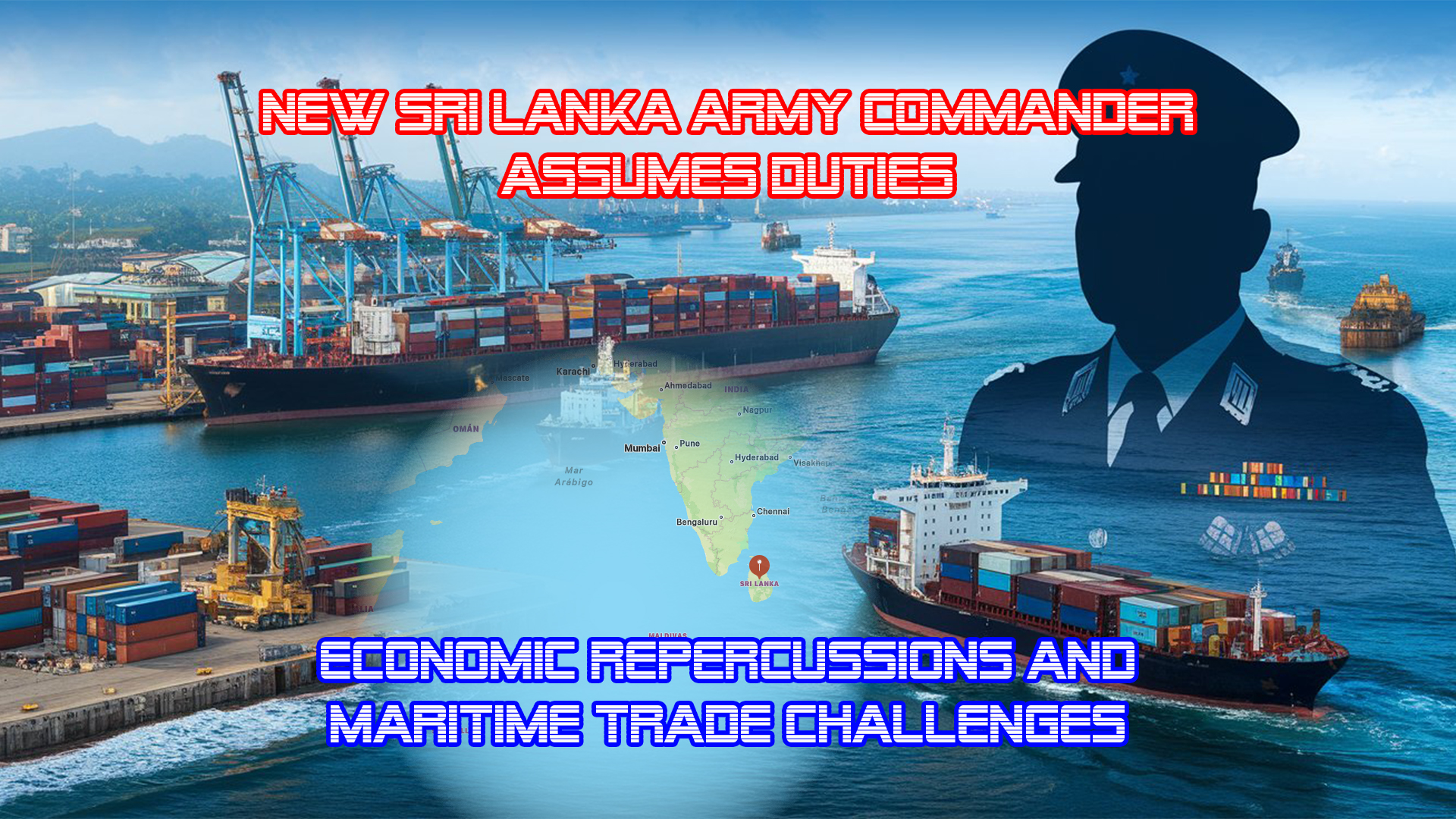
New Sri Lanka Army Commander Assumes Duties: Economic Repercussions and Maritime Trade Challenges
The appointment of a new Sri Lanka Army Commander comes at a critical juncture for the nation. With Sri Lanka striving to stabilize its economic outlook following a severe financial crisis, the implications of this leadership change extend beyond the military sphere, potentially impacting domestic stability, foreign investments, and global trade routes.
Strengthening Domestic Stability
The new Army Commander’s primary role in ensuring security and stability within Sri Lanka could serve as a cornerstone for restoring investor confidence. Political and social unrest in the past significantly deterred foreign investments and exacerbated the country’s economic downturn. A stable security environment is essential for fostering economic recovery, particularly as Sri Lanka seeks to attract international capital to revitalize industries like tourism, manufacturing, and agriculture.
Implications for Maritime Trade
Sri Lanka’s strategic location in the Indian Ocean places it at the heart of global maritime trade routes. The island nation’s ports, such as the Colombo Port, are pivotal transshipment hubs for international trade, connecting Asia, Europe, and the Middle East. However, the maritime sector faces several challenges, including piracy threats, geopolitical tensions, and logistical inefficiencies.
The new military leadership could influence the security of these trade routes. Strengthening naval operations and collaborating with international partners to secure maritime corridors would be critical. A proactive approach could mitigate risks and enhance Sri Lanka’s reputation as a reliable trading partner.
Global Trade Ripple Effects
Maritime trade disruptions in Sri Lanka could have cascading effects on global supply chains. As the world grapples with ongoing shipping delays and increased freight costs, any instability in this key region would exacerbate these issues. Furthermore, geopolitical tensions involving major powers like China and India, both of which have vested interests in Sri Lanka’s ports, add a layer of complexity to the situation.
Economic Recovery and Geopolitical Balancing
Sri Lanka’s economic recovery depends not only on domestic reforms but also on navigating its geopolitical relationships. The new Army Commander’s stance on international partnerships could influence Sri Lanka’s ability to leverage foreign aid and investments. Maintaining a neutral and cooperative approach with global powers is essential to ensure that the nation remains an attractive destination for trade and investment.
In conclusion, the appointment of the new Sri Lanka Army Commander is not merely a domestic military matter. It holds broader implications for economic stability and global trade, particularly in the maritime domain. A coordinated effort to enhance internal stability and secure maritime trade routes will be pivotal in shaping Sri Lanka’s economic trajectory and its role in the global economy.
About the Author