
What Happened to Barcelona? From European Paradise to Tension Zone
In 1992, Barcelona presented itself to the world as a transformed city. The Olympic Games not only renewed its waterfront but also projected an image of modernity and culture that became a global benchmark.
For years, the city was admired for its urban revitalization and its ability to combine infrastructure, art, and tourism into a successful model. However, the current reality offers a troubling contrast.
The first noticeable change is how the urban landscape has stopped being merely a showcase of beauty and planning. Areas that were once a source of pride, such as Ciutat Vella or Las Ramblas, now face security problems that affect both residents and visitors.
The density of minor crimes, especially pickpocketing, has reached levels higher than those of other Spanish capitals. In the years before the pandemic, Barcelona recorded peaks of over 90,000 thefts per year, establishing itself as one of the main hotspots for pickpocketing in Europe.

Although crime decreased in 2020 and 2021 due to the drop in tourism, since 2022 there has been a steady increase, bringing figures close to previous levels again.
This phenomenon is significant considering that thefts account for approximately 35% to 40% of all crimes recorded in the city, which exceeds 200,000 criminal offenses annually. The crime rate stands at around 120–130 offenses per 1,000 inhabitants, more than double the Spanish national average of about 50 per 1,000. This not only affects daily life but also damages the city’s international image.
Tourists encounter systematic pickpockets in areas such as the metro—especially central lines—the Gothic Quarter, and Las Ramblas, while residents deal with persistent insecurity that seeps into everyday life.
Adding to this situation is the progressive deterioration of Ciutat Vella, one of the most emblematic historic districts. This area concentrates some of the highest crime rates in the country, with recurring issues including theft, open-air drug sales, and neighborhood conflicts.
Various associations have warned of a “structural degradation” of the area, where coexistence has become increasingly difficult.
Another urban phenomenon that cannot be ignored is the illegal occupation of homes for criminal purposes. Catalonia accounts for approximately 40% of all illegal occupations in Spain, and Barcelona is one of the main hotspots. In this context, dynamics linked to organized groups managing occupations have proliferated, creating insecurity in entire communities and facilitating the use of properties for illicit activities.
A particularly visible example of this issue is the phenomenon known as “narcopisos,” especially in neighborhoods like El Raval.
Between 2018 and 2019, these apartments used for drug dealing multiplied, forcing authorities to intervene intensively. Within a few years, security forces shut down more than 200 such locations, although the problem has not completely disappeared and tends to reappear intermittently. Its effects go beyond the crime itself: it generates associated violence, nighttime insecurity, and a deep deterioration of the social fabric.
The local economy, commerce, and community life are affected by these dynamics operating in the shadows of the tourist city.
What were once spaces for meeting and coexistence are now perceived as risk zones, with a palpable social tension.
The cumulative effects are clear: trust in authorities declines, and the sense of abandonment intensifies, even when general data show statistical decreases in certain crimes.
This last point is key.
According to the Barcelona Municipal Barometer, insecurity has remained for years the main concern among citizens, above other structural issues.
This reveals a significant gap between official data and social perception: even when some indicators stabilize or decline, the visibility of crime in public spaces maintains a constant feeling of vulnerability.
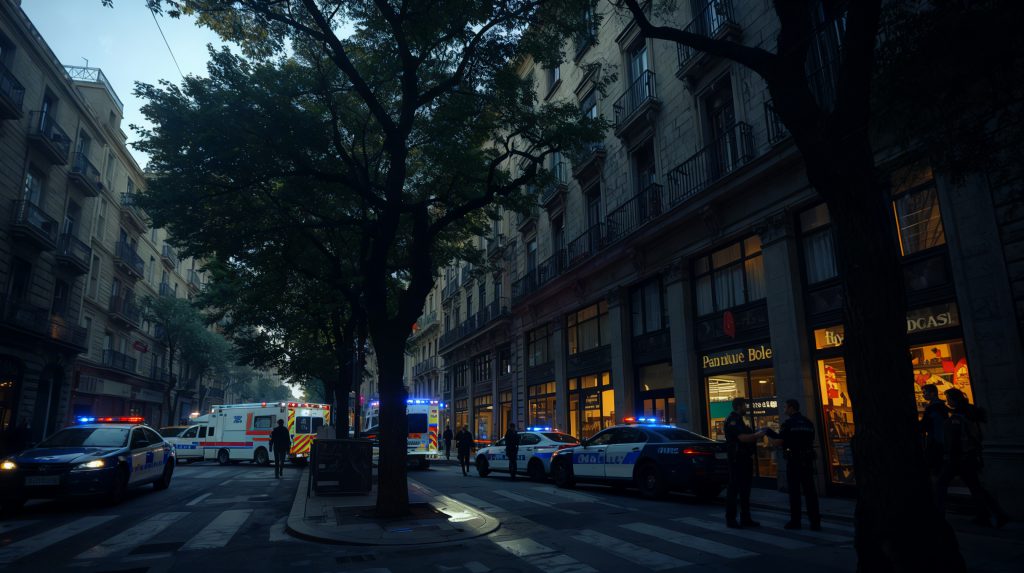
Managing these problems poses a complex challenge. Institutional decisions, coordination between police forces, and prevention policies directly influence the city’s evolution. Barcelona has attempted to respond with new security strategies and urban regeneration projects, but public perception does not always align with statistics.
The visible presence of crime in tourist and central areas creates an impact that cannot be offset by numbers alone.
This context is further shaped by a significant demographic transformation. In the early 2000s, the foreign population in Barcelona represented only about 3% to 4%. Today, that figure stands at approximately 25% to 30% of the total population, reaching even higher percentages of 40% to 50% in neighborhoods like El Raval or areas of Ciutat Vella.
This growth responds to global migration dynamics and has contributed to diversifying the city, but it also poses challenges in terms of social integration, access to employment, and urban cohesion.
It is important to note that there is no direct and universal relationship between immigration and crime, but it is also important to emphasize that this phenomenon has increased alongside the growth of the immigrant population.
However, police reports and local studies have identified an overrepresentation of foreign individuals in certain crimes such as theft, especially within organized networks.
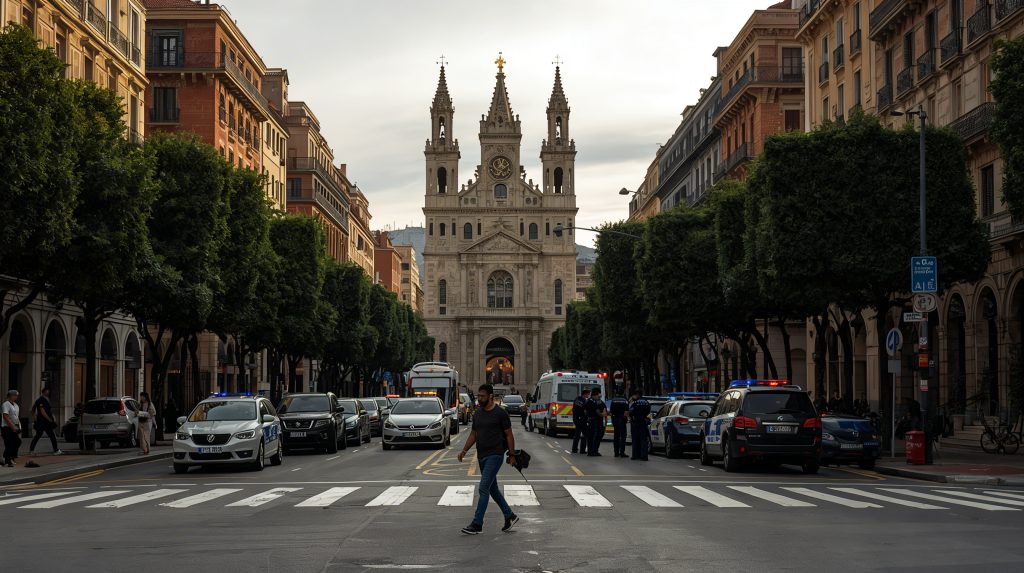
This phenomenon is usually more closely linked to factors such as social exclusion, economic precariousness, and the existence of criminal structures than to immigration itself, although selection in immigration is an important factor, adding complexity to the debate and requiring more comprehensive responses.
The contrast with Olympic Barcelona of the 1990s is striking.
The transformation that was celebrated as an example of planning and strategic vision now shows that initial success does not guarantee long-term stability.
Every decision, every policy, every approach to urban and social management has consequences that accumulate over time, and when neglected, even the most valuable spaces can lose their shine.
Despite the problems, the city retains its cultural richness, its infrastructure, and its global appeal—but not for long.
Its history, architecture, and capacity for innovation continue to be admired and studied around the world, for as long as they last.
But the lesson from its recent evolution is clear: urban quality of life and security depend on constant maintenance, coherent decision-making, and the ability to adapt to new social tensions.
Barcelona still has the resources and talent to redefine its future, as long as they do not leave.
The key question is whether institutions will be able to act in time, recognizing accumulated mistakes and addressing challenges with a comprehensive vision that combines security, culture, and efficient urban management.
If not, even such an iconic city could see decline take hold irreversibly in its streets and historic neighborhoods.
By Master
About the Author