
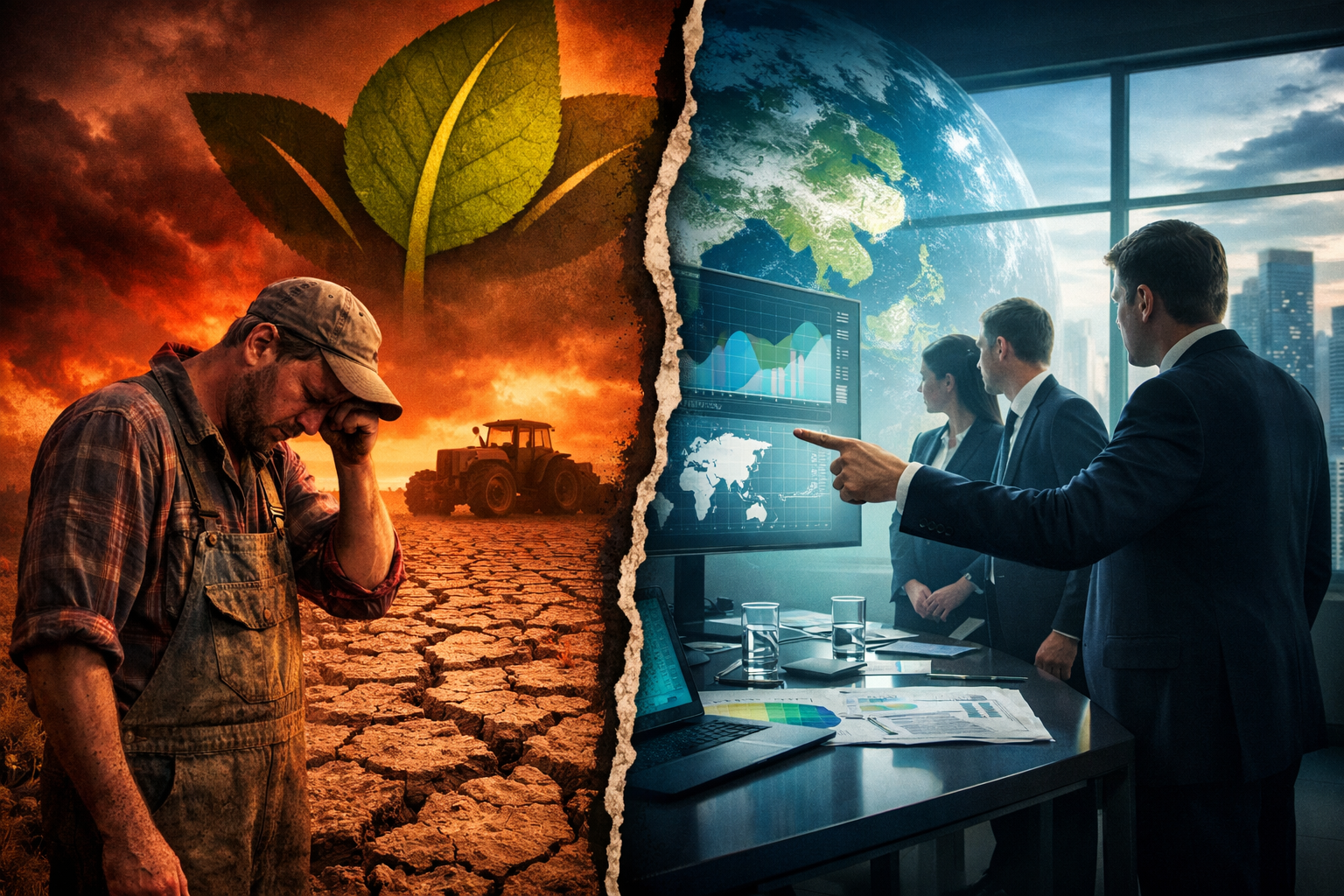
The Death of Farming: The Green Policies Destroying Agriculture
For decades, the world has taken for granted one of the greatest achievements of modern civilization: the relative abundance of food. Since the so-called Green Revolution in the mid-20th century, agricultural productivity has helped feed a global population that grew from 3 billion to more than 8 billion people.
However, in recent years, a growing concern has emerged among farmers, agricultural economists, and public policy analysts: the system that made this abundance possible is now under unprecedented political and regulatory pressure.
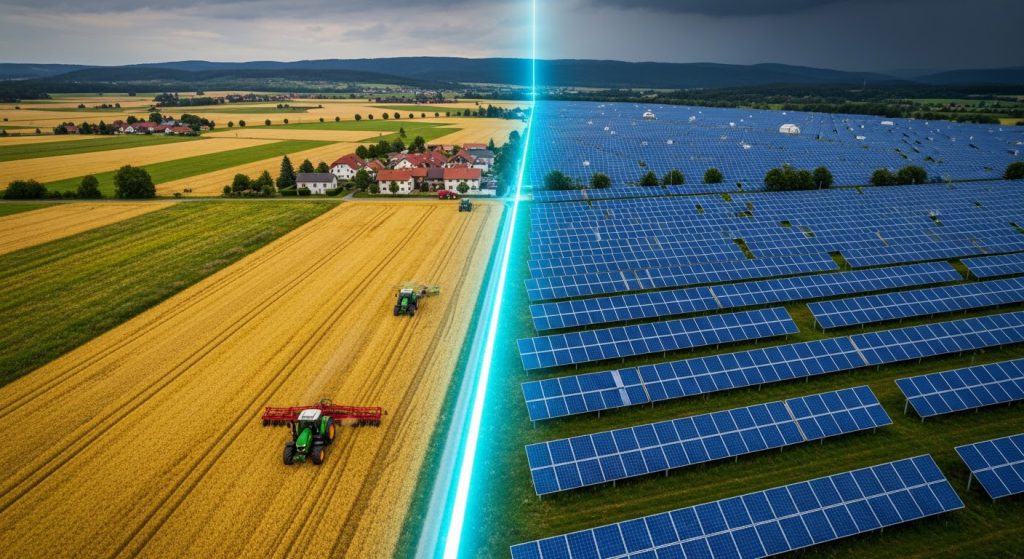
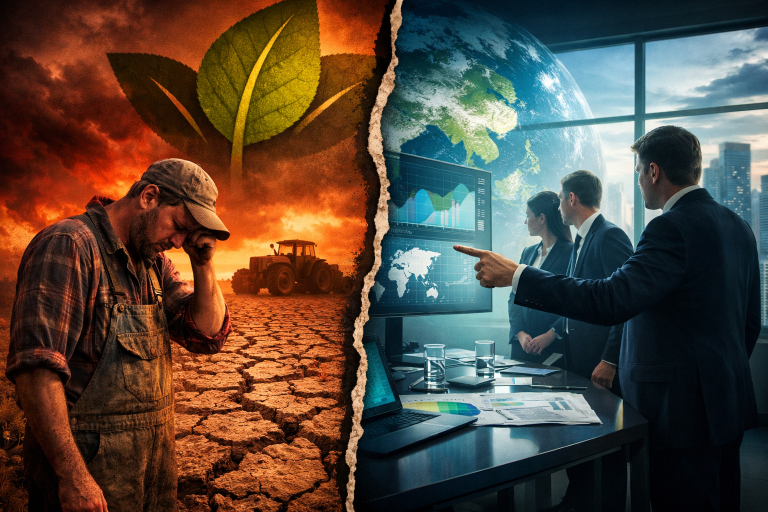
This is not about denying real environmental challenges—such as soil erosion, biodiversity loss, or water pollution—which must be addressed seriously. The problem arises when policies are designed in distant offices, disconnected from the realities of farming, imposing ideological or bureaucratic goals that, in practice, reduce the ability of farmers to produce food.
Regulations Made in Offices, Not in Fields
A clear example of this tension can be seen in Europe, where the so-called Green Deal and other environmental policies have introduced new conditions for agriculture.
Among them are requirements to leave part of farmland unused in order to promote biodiversity. In 2023, for instance, European farmers had to set aside about 4% of their land as non-productive if they wanted to qualify for agricultural subsidies.
On paper, this may seem reasonable. In practice, for many farmers, it means directly reducing the land available for food production at a time when global supply is already under pressure.
The reaction from farmers came quickly. During 2024 and 2025, tractors blocked roads in France, Germany, Poland, Spain, and other European countries. These protests highlighted an issue rarely discussed in urban political debates: every new environmental regulation brings higher costs, more bureaucracy, and lower competitiveness—while also increasing government spending and favoring artificial or non-productive jobs over real agricultural work.
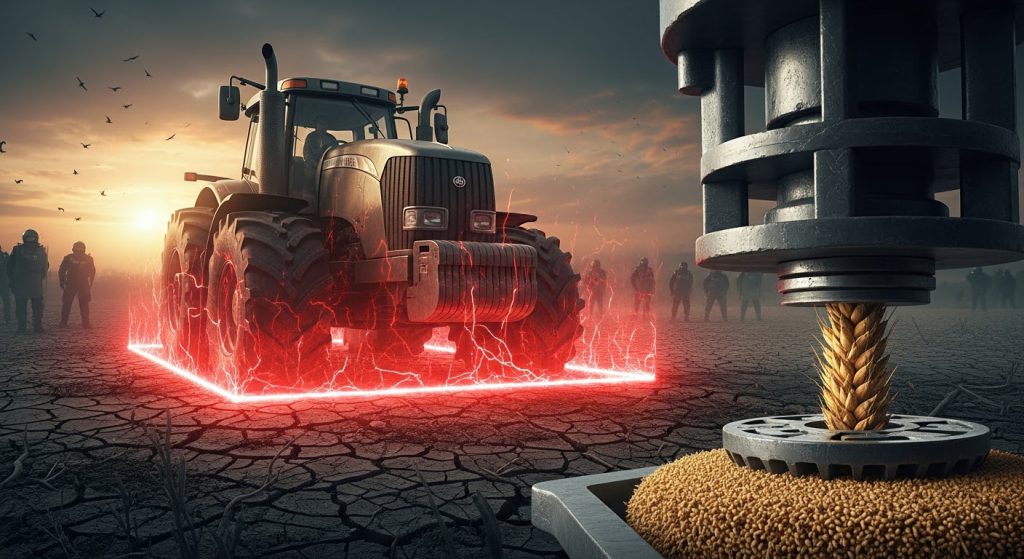
Under social pressure, even the European Commission acknowledged that some rules needed to be relaxed. Recent proposals aim to reduce administrative burdens and ease certain environmental requirements, as farmers argue that current policies threaten their economic survival.
Farmers Caught Between Rising Costs and Global Prices
Modern agriculture already operates on extremely thin margins. Fertilizers, fuel, machinery, improved seeds, and transportation form a chain of costs that has risen significantly in recent years.
Adding to this pressure is a political paradox: while environmental regulations make local production more expensive, markets remain open to imports from countries where such rules either do not exist or are far less strict.
European farmers frequently point this out: competing against imported agricultural products without the same restrictions is, in practical terms, competing at a structural disadvantage.
The result is a quiet but persistent process: small farms disappear, land is abandoned, or it is absorbed by large agribusiness corporations that can survive within the complex regulatory system.
Fewer Farmers, More Dependence
The decline of family farming is not new, but its pace has accelerated. In many developed regions, the number of farms has been shrinking for decades while the average farm size continues to grow.
This shift has deep consequences. Producer diversity decreases, the resilience of the food system weakens, and production becomes concentrated in fewer hands. When supply chains depend on fewer players, any disruption—war, drought, or an energy crisis—can have disproportionate effects.
The Russian invasion of Ukraine in 2022 was a harsh reminder of this fragility. Ukraine and Russia account for a significant share of global exports of wheat, corn, and fertilizers. When the conflict disrupted those supply chains, global food prices surged, hitting importing countries in Africa and the Middle East especially hard.
In this context, reducing agricultural production in stable and highly productive regions for regulatory reasons can have unexpected global consequences.
The Gap Between Political Idealism and Agricultural Reality
Many environmental goals promoted in recent years—such as drastic reductions in pesticide use, limits on fertilizers, or restrictions on livestock due to methane emissions (which in some contexts can act as a natural fertilizer)—are based on concerns that are, in some cases, legitimate.
However, when these policies are implemented without considering their impact on production, the results can be counterproductive.
Farming does not work like a laboratory. Each crop depends on complex biological cycles, changing weather conditions, and constant risks. Removing key agricultural tools without providing viable alternatives can simply lead to lower yields.
Studies on agricultural systems show that fertilizers and pesticides have played a crucial role in stabilizing crop yields since the Green Revolution.
Restricting or eliminating these tools without equivalent innovations may create systems that are more vulnerable to pests, diseases, and extreme weather events.
The Risk of a Manufactured Shortage
Economic history shows that food crises are rarely caused by a single factor. They usually result from a combination of poor policies, geopolitical shocks, and regulatory mistakes.
The current risk is not that the planet cannot produce enough food. In fact, agricultural technology continues to advance. The real danger is political: creating a regulatory environment that makes food production increasingly difficult.
When farming becomes unprofitable or unviable for millions of independent farmers, the inevitable outcome is less production, greater industrial concentration, and increased dependence on fragile global supply chains.
A Debate That Is Just Beginning
The debate over the future of the global food system is far from settled. Environmental challenges are real and require smart solutions. But the answer is unlikely to come from blaming farmers or imposing theoretical goals from bureaucratic structures disconnected from production realities.
Food security is not guaranteed by speeches or administrative decrees. Ultimately, it depends on millions of farmers who decide each season to plant, invest, and take risks.
If public policies make that decision increasingly difficult, the result will not be an orderly ecological transition.
It will be something much simpler—and far more dangerous: less food in the world.
And when that happens, history shows that the consequences do not stay in the countryside. They reach the table.
About the Author